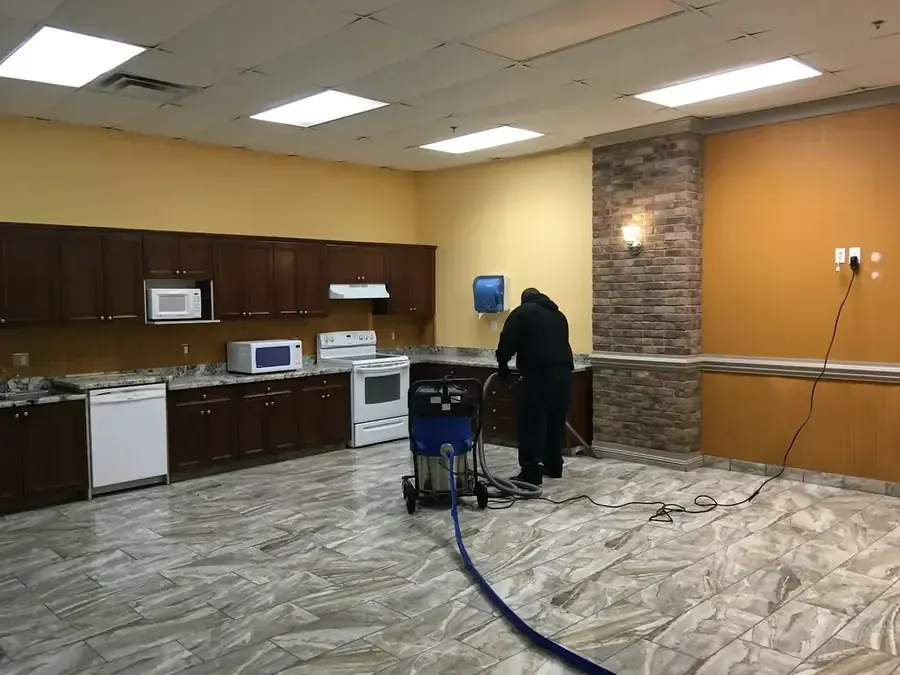
A puddle in a Sand Springs home can hide a larger cleanup problem at the edges of the room. Water beneath a sofa, along a cabinet base or across a doorway needs attention before the room can return to use. An extraction assessment connects those separate wet areas into a practical removal and drying plan.
Key takeaways
- Keep occupants on a dry route while the water source and electrical conditions are assessed.
- Photograph furnishings in their original positions before moving them for extraction.
- Include thresholds and adjoining finishes in the inspection boundary.
- Ask for the remaining wet materials to be identified after liquid removal.
Begin with the route through the room
A useful inspection starts at the entrance that can be reached safely. The technician identifies a dry staging space, the visible water and the route needed for hoses, so occupants do not have to step through the work area to reach an unaffected part of the home.
The source needs separate attention before removal begins: a plumbing professional may need to isolate or repair a leaking connection, while an electrical hazard can prevent access altogether. Equipment placement follows those conditions instead of assuming that an available outlet is safe simply because it appears dry.
The water extraction service addresses accessible liquid and the material inspection that follows. Describing which doorway is usable, whether the release continues and what rooms remain occupied helps establish the first work area without moving heavy belongings across wet surfaces.
- Identify the dry entrance available to the crew.
- Describe ongoing water movement from a safe position.
- Keep electrical devices and their cords away from the wet area.
Record furniture before clearing floor access
Furniture can conceal water at the exact point where extraction equipment needs to reach, so photographs taken before movement should show the original position of chair legs, storage boxes and low shelves. Those details help distinguish water contact from marks discovered after the room has already been rearranged.
The movement plan should identify a destination for every affected group of belongings. Damp boxes placed against a dry wall can transfer moisture and block later measurements, so temporary storage needs a clean route and enough space to keep affected contents separate from dry items.
Heavy cabinets and upholstered furniture require a handling decision based on their condition and the floor beneath them. The crew can document a blocked section for later access instead of dragging an unstable object through water or treating an inaccessible floor edge as though it has been checked.
Follow the doorway into the next space
A doorway is an inspection point because finishes often change there: carpet may meet tile, or a wood surface may end at a threshold, leaving edges that hold moisture after the central puddle disappears. Measurements on both sides help define the actual boundary of the affected assembly.
Water can also collect beneath trim without remaining obvious on the walking surface. The technician looks at the wall base and fixed cabinetry along the route, recording where access is limited and where additional inspection is needed before the affected area can be closed out.
Adjacent rooms deserve individual notes rather than a single label for the entire floor. A bedroom with wet carpet, a dry hallway and a damp closet present different conditions, and the work record should make those differences easy for the owner to follow during later decisions.
- Compare the adjoining finishes at each wet doorway.
- Record concealed edges that still need access.
- Mark checked locations on a simple room sketch.
Match liquid removal to the exposed surface
Extraction tools need access to the material they are treating. A broad open floor, a carpeted corner and the narrow space beside an appliance may call for different approaches, and the technician should explain which surfaces can be reached while the furnishings remain in place.
Water condition influences handling as well as the choice of equipment. Outdoor water, drain water and a stopped indoor supply release can require different cleaning decisions, so the original source and visible contact conditions belong in the assessment before the crew begins circulating air across the area.
If the release originated beneath household equipment, the appliance leak cleanup page covers access behind those obstructions. A floor that looks clear from the doorway may still need inspection at a machine recess or under a cabinet panel after the visible liquid is recovered.
Identify what remains wet after extraction
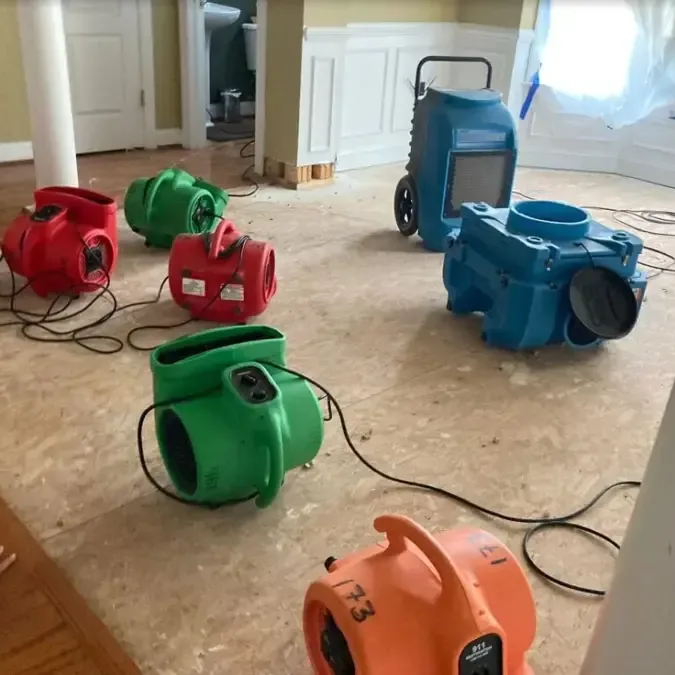
The end of pumping or vacuum extraction leaves a useful opportunity to inspect the exposed material. Stains, lifted edges and moisture readings can now be recorded without standing water hiding them, and the crew can explain which parts of the room need further drying or removal.
A wall base may respond differently from the center of a floor because its layers and access are different. Keeping separate measurements for those locations allows drying adjustments to address a specific problem instead of treating every surface as though it should respond at the same pace.
The structural drying process follows retained materials through repeat checks. A dry appearance is only part of that assessment, particularly around fixed objects where air movement and measurement access may remain restricted after the room has been cleared.
- List retained materials that still have elevated readings.
- Identify removal decisions separately from drying work.
- Keep measurement locations consistent during follow up visits.
Make the occupied part of the home workable
A family may still need access to sleeping spaces, a bathroom or an exterior door while equipment operates. Discussing those routes early helps the crew arrange hoses and devices around practical household movement, subject to electrical safety and the condition of the affected rooms.
Equipment should stay where the drying plan places it unless the technician directs a change. Moving a device to make more walking room can leave an edge untreated or interrupt moisture control, so a difficult route deserves a placement adjustment rather than an informal rearrangement between visits.
Children and pets need a clear boundary from wet materials and equipment. A closed room or other appropriate separation can make that boundary easier to maintain, and the work record should identify any access limitations that affect inspections, belongings retrieval or the timing of a return visit.
Close the extraction record with a clear handoff
The owner should be able to see what changed during extraction. Before and after photographs, a room sketch and a list of moved belongings connect the original water boundary with the surfaces now available for inspection, cleaning and measured drying inside the building.
Unfinished items belong in their own part of the handoff. A damaged cabinet base, an inaccessible floor section or a plumbing repair still awaiting completion should remain visible in the record so the next trade can understand the room without reconstructing the entire event from memory.
The final explanation should distinguish liquid removal from completion of the whole restoration project. Sand Springs property owners can use that distinction to coordinate contents handling, drying and finish repairs around actual conditions, with a practical list of the decisions and access needs still outstanding.
Questions
Can extraction finish while some materials are still damp?
Yes. Recovering accessible liquid and drying moisture held inside materials are different parts of the work. The next inspection should identify the surfaces that still need treatment.
Should wet furniture be moved before the crew arrives?
Safe access and handling come first. An owner can photograph belongings from a dry position and leave heavy or unstable pieces for an appropriate movement plan.
Why does an adjoining room need inspection?
Water may cross beneath a transition strip or continue along concealed floor edges. Checking the neighboring material establishes where the affected area actually ends.
What information helps explain the initial spill?
The observed source, rooms involved, visible movement and any changes made before arrival give the technician a useful starting account. Photographs help preserve details that extraction will alter.