Crawl Space Water Removal in Sand Springs, OK
For a Sand Springs property with a crawl space, the crew assesses underfloor water, access and contamination before pumping. Drying then follows the joists, subfloor and other affected materials.
(888) 619-9509Discuss water beneath the raised floor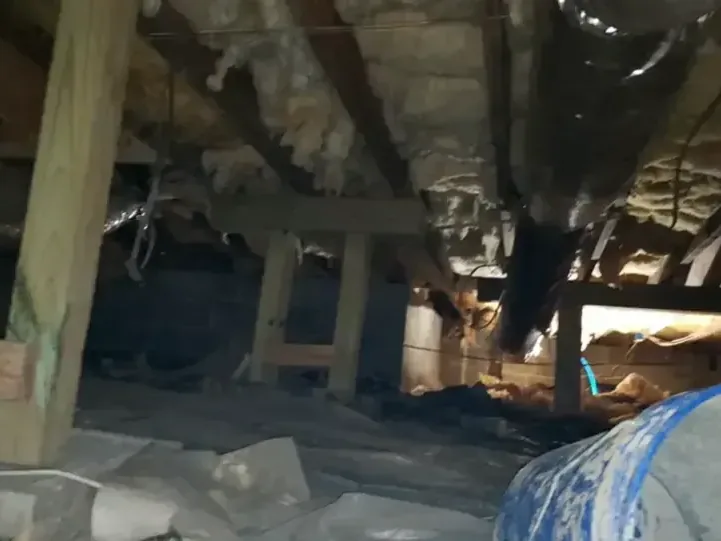
For a crawl-space property in Prattville, RiverWest or the Box District, the assessment begins at the access opening. The crew checks clearance, standing water and the condition of exposed framing before taking equipment underneath. A damp room above also needs readings at the subfloor and wall bases to trace moisture through the connected assembly.
How crawl space water removal progresses
Assess the space
The contractor checks construction, access, utilities and water origin before selecting pumping and personnel protection. The initial plan also identifies safe discharge arrangements and the protection required for restricted underfloor access.
Remove bulk liquid
The operator pumps or extracts water through a controlled route, then reassesses the exposed ground and building materials.
Treat affected assemblies
The team removes unsuitable insulation, cleans recoverable surfaces when required and establishes equipment access to the wet wood.
Monitor the floor system
Readings at joists and subfloor show whether drying progresses, with remaining source or repair issues documented separately.
First steps for crawl space water removal
- 1Avoid underfloor entry. The household stays out of pooled water beneath the structure until access and utilities receive professional assessment.
- 2Record accessible symptoms. Notes about damp flooring, sounds or visible water at the access opening help the team without requiring entry.
- 3Coordinate source control. The appropriate plumbing or building trade addresses an active source while restoration plans removal and drying.
- 4Keep the opening accessible. Occupants clear a dry approach without moving wet contents or exposing themselves to the underfloor space.
Establishing safe access beneath the building
A crawl space may contain wiring, plumbing, low clearances and unstable or damaged material. Standing water can hide those hazards. The contractor evaluates entry and ventilation before personnel go underneath. Occupants should not crawl through pooled water to photograph a pipe or retrieve stored items.
- The team determines whether water originates from a supply failure, drainage issue or outside entry.
- The assessor checks whether electrical equipment or connections contact the wet area.
- The contractor plans the pumping and waste route without sending dirty water into a dry occupied space.
- The technician inspects wet insulation and the underside of the subfloor after access becomes safe.
Sand Springs experienced Arkansas River flooding in May 2019. After outside water enters beneath a building, inspection includes sediment, saturated ground cover and the lowest exposed wood. The crew traces the entry point and checks nearby supply pipes, ground moisture and foundation openings before selecting a removal method. A leaking pipe can fill an underfloor low point during dry weather. Source correction and water removal need coordinated scopes so the space does not refill immediately after pumping.
An underfloor puddle and a wet subfloor are related but separate problems. The assessment checks access, water origin and the building materials above the pooling before choosing a removal method.
(888) 619-9509Discuss water beneath the raised floorRemoving pooled water and compromised layers
Pump selection depends on water volume, debris and access. The crew checks where the discharge can go under the applicable work requirements. After bulk removal, the assessment follows wet insulation, wood members and ground-cover condition. A wet or displaced ground cover can complicate access without proving that it caused the original loss.
- Control the active source or identify ongoing entry before repeated pumping.
- Remove pooled water with equipment suited to the confined access and debris.
- Evaluate insulation and other porous materials against contamination and saturation.
- Expose recoverable wood surfaces that require drying and measurement.
Contaminated outside water or sewage requires a different removal and cleaning plan from a fresh supply release. The sewage cleanup page explains Category 3 handling. Drying contaminated insulation in place is not a substitute for appropriate disposal and surface cleaning.
Safe access comes first
The restoration crew checks electrical exposure, overhead stability and the water source before entering the wet area. Occupants keep clear of sagging ceilings and contaminated floors. A qualified professional isolates affected circuits from a dry location. These checks precede extraction because standing water can conceal damage that a surface inspection misses.
Following the joists and subfloor to a dry goal
The drying technician measures the underside of the floor and accessible framing, comparing suitable unaffected wood. Air movement needs a path to those surfaces, while dehumidification handles the moisture they release. Simply opening vents may not establish controlled drying conditions, especially when outdoor air adds moisture to the space.
The owner can review EPA flooded-home information for cleanup considerations and FEMA flood mapping for separate parcel questions. Neither source replaces inspection of the actual underfloor assembly. The contractor documents wet material, removal decisions and the readings supporting the end of drying.
- Source notes distinguish a plumbing release from recurring exterior entry.
- Photographs record wet insulation and the condition of accessible framing.
- Material logs track the underside of the floor rather than room humidity alone.
- The final report identifies repairs or drainage questions outside the completed dry-out.
What does crawl space water removal cost in Sand Springs, OK?
Crawl-space water removal and drying commonly range from $1,000 to $5,000. Restricted access, water contamination, wet insulation and the amount of affected wood can increase the scope even when the visible pool seems limited.
Accessible pooling
$1,000 to $1,800
- Pumping
- Source assessment
- Initial wood readings
Wet insulation and wood
$1,800 to $3,200
- Selective removal
- Equipment access
- Monitored drying
Restricted contaminated space
$3,200 to $5,000
- Controlled handling
- Cleaning decisions
- Detailed material checks
These planning ranges are estimate only. Water category, affected area, material class and the delay before extraction change the scope. The Sand Springs water damage cost calculator explores those variables.
Careful decisions for crawl space water removal
Rapid local response
The response team assesses active water, access and source control during 24/7 dispatch. Arrival depends on current conditions and the work required at the property.
IICRC S500 drying standard
The drying technician compares wet assemblies with suitable dry references and adjusts dehumidification to the material load. A dry surface alone does not close the job.
Claim-ready documentation
The mitigation team records initial damage, material decisions, equipment and daily readings. The property owner retains a clearer account of the loss for the insurance review.
Local water experts
The contractor checks the actual building and the reported source before choosing a method. Indoor supply releases, contaminated outside water and backed-up drains require different handling.
Crawl space water removal in Sand Springs
Coverage includes Prattville, the Box District and RiverWest, with ZIP 74063. The response team confirms access, the water source and the affected rooms before planning equipment.
Nearby service areas include Mannford, Oakhurst, Sperry, Owasso and Bixby.
Related water damage services in Sand Springs

Structural Drying
Material readings direct dehumidification until the assembly reaches a defensible drying goal.
Read about structural drying ›
Burst Pipe Water Damage
A stopped pipe release still leaves wet cavities that need measured drying and documented access.
Read about burst pipe water damage ›
Storm Flood Cleanup
Outside water brings sediment and contamination indoors, changing both extraction and material decisions.
Read about storm flood cleanup ›Crawl Space Water Removal questions in Sand Springs, OK
Does this mean most local homes have crawl spaces?
No. The service applies only to properties with that construction. The assessment verifies the foundation and access directly. The contractor verifies the foundation directly and records the underfloor access before planning removal and structural drying.
Is pumping enough if the ground looks clear?
No. Insulation, joists and the underside of the floor may remain wet after pooled water disappears. The technician checks those materials and identifies contamination or access needs. Structural drying follows the removal stage, with readings establishing whether the retained assembly reaches a suitable moisture condition.
Should occupants open every vent?
Outdoor air conditions and the building layout determine whether ventilation helps or introduces more moisture. The drying contractor evaluates that balance along with equipment and access. A general instruction to open vents cannot replace a controlled plan that measures the wet wood and manages the moisture released during evaporation.
Can wet insulation stay underneath the floor?
Material type, saturation, contamination and drying access control that decision. Insulation that holds water against wood or has contacted contaminated water may require removal. The crew explains the condition and scope, then inspects the framing behind it rather than treating the insulation surface as the entire problem.
Who fixes recurring water entry?
The source may require a plumbing, drainage or building repair assessment beyond water removal. The restoration contractor documents what the inspection reveals and distinguishes those repairs from pumping and drying. The owner should resolve an active or recurring source before assuming that new insulation or ground cover finishes the loss.
What changes the cost beneath a house?
Low clearance, difficult access, water volume, contamination and insulation removal can increase labor and equipment requirements. The estimate should identify those tasks separately from source repair. A modest underfloor area can involve more work than an open room if safe access and disposal routes are restricted.
Can room humidity show whether the subfloor is dry?
Room humidity helps describe air conditions, but it does not measure water held inside wood beneath the floor. The technician takes material readings at appropriate locations and compares them with dry references. The underside can remain wet even when the occupied room above feels comfortable.
What should the completion record include?
The record should identify the source status, removed materials, cleaning where applicable and the final readings on retained framing and subfloor. Unresolved drainage or repair needs should remain visible in the handoff. That distinction prevents a completed dry-out from being mistaken for a permanent solution to continuing water entry.
Check the underfloor space before pumping
24/7 assessment considers confined access, utilities and the wet assembly so water removal supports a practical structural drying plan.
(888) 619-9509Arrange an underfloor water assessment