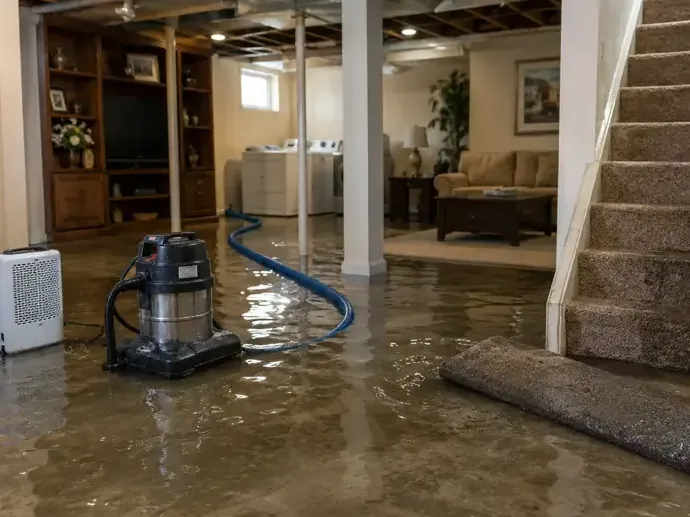
Mannford sits beside Keystone Lake, and the lake arm fills the Salt Creek valley. When outside water enters a home, the indoor cleanup begins with its entry path and the surfaces it touched. Doorways, stored belongings and deposited sediment help the crew document the affected rooms before water removal changes the scene.
Key takeaways
- Follow official access directions and keep occupants away from outdoor floodwater.
- Photograph entry marks and sediment from a safe dry location.
- Separate affected belongings from items that remained dry.
- Complete cleaning and material decisions before drying retained building surfaces.
Read the entry marks at the building
Keystone Lake is a reservoir on the Arkansas and Cimarron rivers. At an affected property, the inspection starts with the building opening where water entered and the indoor route it followed, giving the crew a specific starting point for the cleanup boundary and contents record.
Water marks around a threshold, debris collected at a corner and sediment along a wall can each add useful detail. Those observations should be photographed before sweeping or extraction alters them, with the room name and view direction included so the owner can place each image later.
The storm flood cleanup service addresses outside water and the resulting material contact. Recording whether water came through a door, another opening or an area still requiring inspection helps the team arrange access and choose the initial work zone.
- Preserve a view of the original entry edge.
- Label photographs by room and visible building opening.
- Keep outdoor access observations with the indoor room sketch.
Choose a clean route into the work area
Outside water can carry material from surfaces crossed before it reaches the home. Occupants should stay out of the affected rooms while the crew assesses electrical conditions, unstable finishes and the route needed to bring equipment in without tracking contamination into dry spaces.
A dry doorway may become the equipment entrance, while another route remains available for household movement where conditions permit. The arrangement should be explained to the owner so belongings retrieval does not send people through the same passage used for wet debris and cleanup tools.
Access planning also includes a place for affected contents awaiting a handling decision. Keeping that group apart from clean furnishings makes the room easier to assess and prevents the temporary storage area from becoming an extension of the original water contact boundary.
Distinguish sediment removal from ordinary extraction
The condition of the water and the debris it leaves shape the removal approach. A floor covered with silt needs attention to that material as well as the liquid, and the technician should identify which surfaces can be reached safely before equipment starts moving water.
The water extraction page explains the liquid removal part of the work. After recovery, deposits that remain around thresholds and floor edges can be inspected more closely, allowing cleaning and material decisions to follow the actual contact pattern across the room.
A cabinet recess or concealed flooring edge may still contain affected material after the open walking surface is clear. Those areas belong on the inspection list so the cleanup does not stop at the most visible part of the room while hidden contact surfaces remain untreated.
- Identify debris collected behind fixed obstructions.
- Record water contact beneath accessible floor edges.
- Keep cleaning needs separate from the amount of visible liquid.
Sort belongings by contact and handling needs
A contents list should start with the original room and the condition in which each group was found. A box that sat in water needs a different handling decision from a dry object on an upper shelf, even if both belong to the same storage area.
Absorbent belongings, electronics and important papers may need specialist attention. The owner should receive a clear account of what can be moved safely, what remains for assessment and which disposal decisions need authorization before affected property leaves the cleanup area.
Photographs taken before movement preserve more useful detail than a single image of a mixed discard pile. Keeping item descriptions with their room labels also helps the owner understand what is missing when furnishings return and the space begins to look usable again.
Open wet finishes when cleaning requires access
Outside water contact can affect both an exposed finish and the material behind it. The crew assesses whether retained surfaces can be cleaned adequately and whether a porous layer needs removal, explaining the reason before an opening changes the room and obscures the original condition.
Wall bottoms and floor transitions deserve particular attention where deposited material has collected. An opening may reveal a concealed contact path that extends beyond the visible stain, so photographs and material notes should continue as work exposes the next part of the assembly.
Removed pieces need controlled handling through the agreed debris route. A clear record of the room, material type and reason for removal connects the cleanup decision with later reconstruction, making it easier for the next contractor to identify the surfaces that need replacement.
- Document concealed contact discovered during opening.
- Identify retained surfaces that require cleaning before drying.
- Record disposal authorization and the material group removed.
Dry the surfaces that are suitable to remain
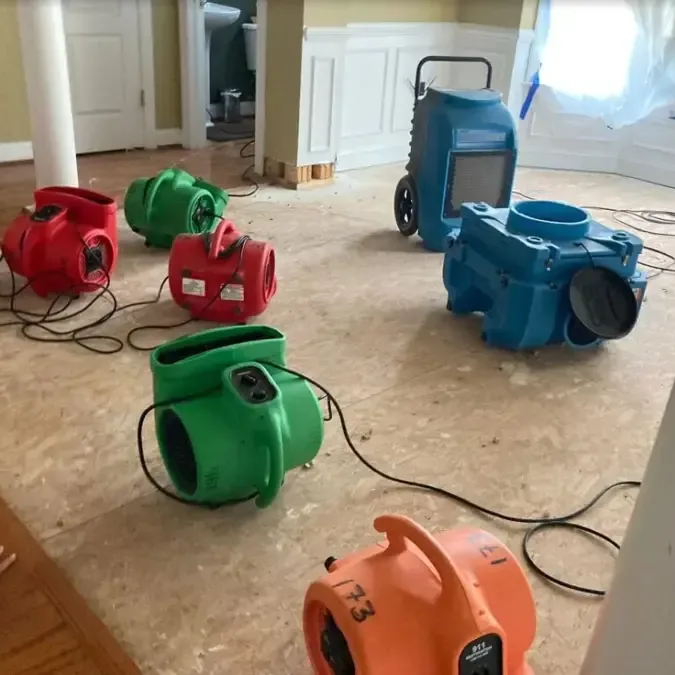
Once liquid, debris and cleaning decisions have been addressed, retained materials can move into a measured drying plan. Equipment placement follows the exposed surfaces and access available in the room, with separate attention to edges that remain restricted by fixtures or structural details.
The structural drying service tracks that response through repeat observations and material readings. The record should distinguish a cleaned room from a dried assembly so the owner understands why equipment may remain after the floor looks orderly and the debris is gone.
If a particular area responds slowly, the crew checks the local conditions and explains any change in access or equipment position. That focused adjustment is more useful than assigning the entire building a fixed drying period before the affected materials have been inspected.
Prepare the property for its remaining repairs
The closing record should show how the affected boundary changed from initial entry marks to cleaned and dried surfaces. Including the contents disposition and removed materials helps the owner coordinate rebuilding without losing track of belongings that were relocated during the first cleanup visit.
Work on the building opening or exterior drainage should be identified separately from the indoor mitigation work. A repair contractor can then evaluate the entry condition while the restoration record remains focused on the water contact, cleaning and drying performed inside the property.
In Mannford, the lake setting gives the article its local context, while the final property record stays specific to the affected rooms. Clear labels for the entrance, retained materials and unfinished repairs make the handoff usable after the water marks themselves have disappeared.
Questions
What should an owner photograph before outside water is removed?
A safe view of the threshold, deposited debris and original contents positions preserves useful information. No photograph is worth entering an unsafe wet room to obtain.
Can a household fan handle outside water cleanup?
Air movement is only part of a drying plan after contamination and material decisions are addressed. The initial assessment needs to establish safe handling and cleaning requirements.
Why are some apparently intact finishes opened?
Water contact behind a surface may require cleaning or inspection access. The crew should connect each opening to a specific material condition or concealed contact path.
What remains after the indoor work is complete?
The handoff may include replacement finishes, belongings treatment and correction of the water entry opening. Those items should be assigned clearly to the appropriate next step.