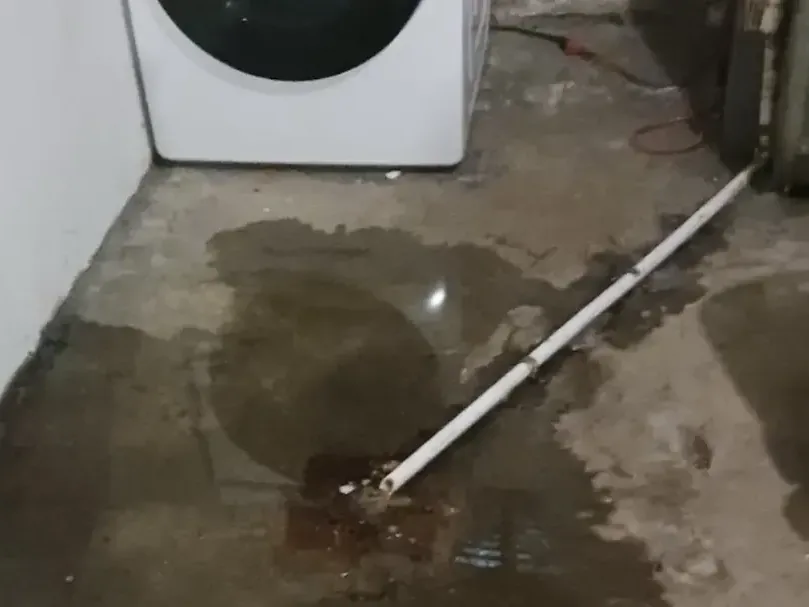
Oakhurst is an unincorporated community spanning Tulsa County and Creek County. Inside an affected household, an appliance puddle can disappear beneath a machine or cabinet before it spreads across the open floor. Cleanup needs access to those concealed surfaces and a clear account of the appliance repair, wet materials and remaining drying work.
Key takeaways
- Stop using a leaking appliance and arrange safe source control.
- Document the machine position and nearby water before access changes the scene.
- Include cabinet bases, floor edges and adjoining rooms in the assessment.
- Keep appliance repair and building material drying as separate documented tasks.
Explain what happened during appliance use
The initial account is most useful when it describes what was observed around the machine. Water appearing during operation, moisture discovered behind it and a wet floor noticed after use are different observations that help the appropriate repair professional begin the source assessment.
An owner should avoid repeatedly running the appliance to reproduce a leak while water continues reaching the building. The service assessment can address connections and equipment conditions with suitable access, while the restoration crew documents the surrounding wet materials and their route into adjacent spaces.
The appliance leak cleanup service covers the room damage associated with that release. A photograph of the original arrangement can show which cabinet edge, wall base or flooring transition was closest to the visible water before the machine moves.
- Record whether the appliance was operating when water appeared.
- Leave electrical connection handling to an appropriate professional.
- Describe visible water without guessing at a failed internal part.
Plan access before shifting the machine
An appliance may have supply connections, a drain connection and electrical components that complicate movement. Access should be planned around those conditions so a heavy machine is not pulled forward in a way that damages a connection or increases the release into the room.
The floor under the appliance can also be weaker or more slippery than the exposed walking surface suggests. The person arranging access needs to consider support and a destination for the machine, allowing the newly exposed area to remain available for inspection and cleanup.
A record of who disconnected the appliance and where it was placed keeps the repair sequence clear. That detail becomes useful later when equipment service, cabinet work and drying visits occur separately, because the owner can distinguish completed source work from a temporary movement made only for access.
Inspect the cabinet recess and toe space
Cabinet bases can hide the path between the appliance recess and the center of the room. The technician checks accessible edges and notes whether a removable panel or another opening is needed to see the material beneath the cabinet instead of assuming the dry face represents the concealed base.
Water contact may affect the back or underside of a component before its front shows a clear change. Photographs of exposed joints and material edges help explain why a cabinet requires additional assessment even when the visible door or finished face appears largely unchanged.
The work plan should identify which components are intended to remain and which need a removal decision. Keeping those distinctions in the record helps avoid confusion between a panel opened for drying access and a damaged component that requires replacement during the finish work.
- Check the exposed cabinet base beside the machine.
- Label access panels retained for later reinstallation.
- Photograph affected edges before damaged pieces are removed.
Trace the floor beyond the obvious puddle
An appliance leak can travel under flooring or along a wall before it becomes visible at the room entrance. Measurements across the accessible area help identify that route, with attention to transitions where a kitchen or laundry finish meets a neighboring surface.
The water extraction process removes accessible liquid from the affected room. Once that liquid is recovered, the crew can better describe what remains wet beneath edges and which concealed sections still need inspection before the drying plan is complete.
A neighboring closet may require a different access arrangement from the main room. Belongings should be documented and moved to an appropriate location if they block a wet edge, allowing the assessment to follow the water instead of ending at the nearest storage obstruction.
- Compare floor readings beside and beyond the appliance recess.
- Include the other side of a wet doorway transition.
- Keep storage items clear of the locations selected for repeat checks.
Treat retained cabinet materials as part of drying
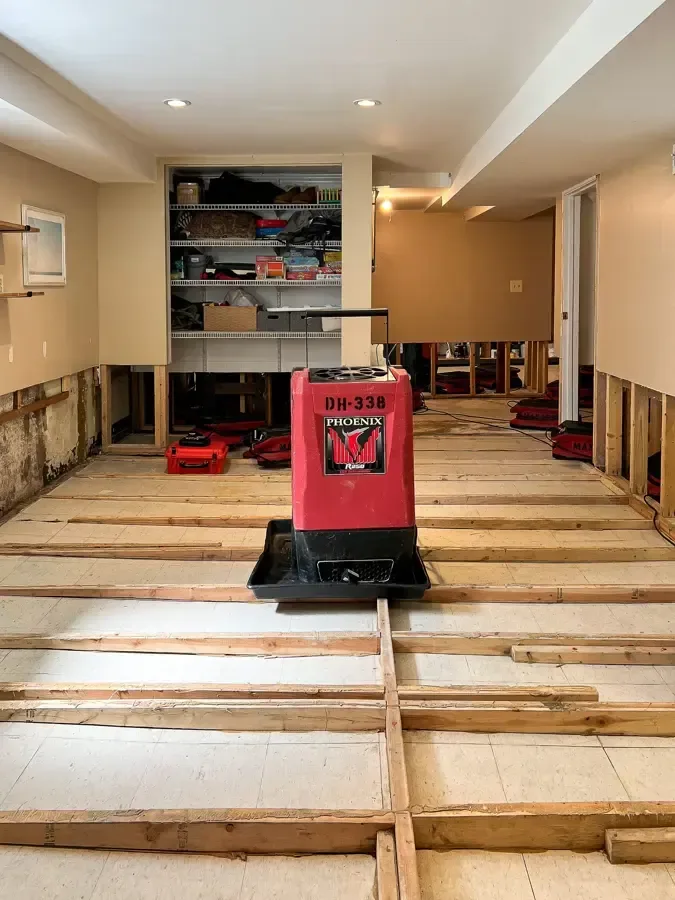
An exposed floor and the concealed base of a cabinet may respond differently during drying. The crew needs access to the retained materials selected for treatment and a way to revisit them, rather than evaluating the entire room from a reading taken on its open walking surface.
The structural drying page explains how material observations support equipment adjustments. A cabinet corner that remains elevated may need a revised access decision, while a nearby surface that has responded appropriately can have its progress recorded separately.
Finish appearance still belongs in the assessment because swelling or separation can affect the next repair decision. Drying a retained component and restoring its original appearance are different questions, and the owner should receive a clear explanation of any visible change that remains after moisture treatment.
Access for appliance repair and room work
The appliance technician needs suitable access to the machine, while the restoration crew needs access to the building surfaces around it. Sharing that arrangement helps keep a reconnected appliance from covering an area that still requires measurement or blocking the equipment placed for drying.
Before the machine returns to normal use, the source repair and the condition of the surrounding room should each have a clear status. An owner can use a short task list to track connection work, material treatment and any cabinet component awaiting replacement or reinstallation.
The arrangement also needs to account for hoses, cords and household movement during the remaining work. A usable room route makes ongoing visits easier, particularly when the appliance is temporarily stored outside its original recess and the affected space still has drying equipment operating.
Preserve the concealed details for the handoff
Photos taken with the machine out of its recess are valuable because the area may become difficult to see again after reinstallation. The closing packet should identify the inspected surfaces, remaining repairs and any section whose access was limited during cleanup or drying.
A clear cabinet note describes the component involved and the reason it was removed, retained or referred for further assessment. That level of detail helps the finish contractor understand the work without relying on a vague description such as damage behind the appliance.
For Oakhurst households, the useful result is an organized account of the actual room and machine involved. Source repair, accessible liquid removal, cabinet treatment and final material checks should each be visible in the record so the owner can coordinate the remaining work confidently.
Questions
Can a dry cabinet door conceal wet material?
The face and the base can have different contact conditions. Inspection of accessible joints and lower components helps determine what happened beneath the finished front.
Should the appliance be pulled out immediately?
Movement needs to account for connections, electrical conditions and support beneath the machine. Safe access should be arranged before a heavy appliance is shifted.
Why is the neighboring closet included?
A shared floor edge or wall base can carry moisture into that space. The inspection follows the observed path and compares the accessible adjoining materials.
What records matter once the appliance is reinstalled?
Photographs of the open recess, source repair details and labeled moisture observations preserve information that will be harder to inspect afterward. Outstanding cabinet repairs should remain clearly listed.