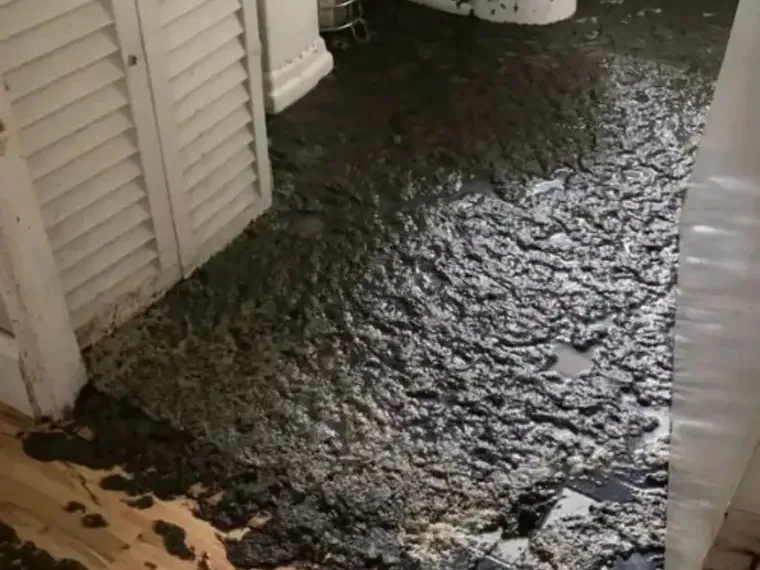
Sperry established a new sewer system through a bond issue in 1955. For a household dealing with a backup today, the immediate concern is the contaminated room and the route people use around it. Cleanup needs clear boundaries, careful material handling and coordination with the professional addressing the drain problem.
Key takeaways
- Keep people and pets outside the affected bathroom or other wet space.
- Arrange a clean route that avoids tracking wastewater into occupied rooms.
- Separate drain repair from removal and treatment of contaminated materials.
- Document belongings before moving them across the work boundary.
Create a boundary before handling the mess
A sewage backup can make an ordinary route through the home unsuitable for household traffic. The initial arrangement should keep occupants away from the affected area while a qualified crew assesses access, the extent of wastewater contact and the surfaces that require controlled cleanup.
A closed door may help mark the room boundary, but the assessment still needs to follow any water that crossed the threshold. A wet hallway edge or adjoining closet belongs within the inspection area even when most of the visible material remains around the original fixture.
The sewage backup cleanup service includes controlled handling of contaminated water and materials. Explaining which rooms remain occupied and which bathroom is affected helps the crew establish a work arrangement that fits the actual layout of the property.
- Keep household traffic away from affected doorways.
- Identify any wastewater that escaped into an adjoining space.
- Tell the crew which occupied rooms require a usable dry route.
Arrange drain work without losing the cleanup boundary
The drain professional needs access to diagnose and correct the blockage or other source condition. That task should be coordinated with the cleanup crew so opening a route to plumbing equipment does not send people or tools through the dry living area without suitable precautions.
The historic sewer construction in town belongs to its municipal history. The present work record should describe the fixture involved, the observations made during the backup and the repair findings at the property, keeping the cleanup scope tied to the affected rooms and materials.
An owner can keep the plumbing findings with the restoration notes while maintaining a separate status for each task. A drain that is functioning again still leaves wastewater contact to address, and a cleaned room still needs the source work clearly recorded before normal use resumes.
Plan separate movement for belongings and debris
Belongings close to the floor can become part of the contaminated area even when their upper surfaces appear unchanged. Each affected group needs a handling decision based on contact and material, with a photograph and original location recorded before it leaves the room.
The route for discarded material should avoid clean storage and household passage where possible. Appropriate containment and equipment handling help maintain that separation, while the owner receives a list of items awaiting a decision instead of finding wet and dry belongings mixed together in another space.
Important documents or specialty possessions may require a qualified contents provider. Their treatment should be discussed individually, with no promise that an item will return to its original condition before its material and contact history have been assessed by the appropriate person.
- Separate items that were contacted from those kept dry.
- Label the original room on contents photographs.
- Record authorization before affected property is discarded when circumstances allow.
Inspect every material touched by wastewater
A floor finish, its underlying layer and the wall base can have different cleaning needs after the same backup. The assessment identifies those components separately so an intact looking surface does not conceal absorbent material that requires removal or a more detailed access decision.
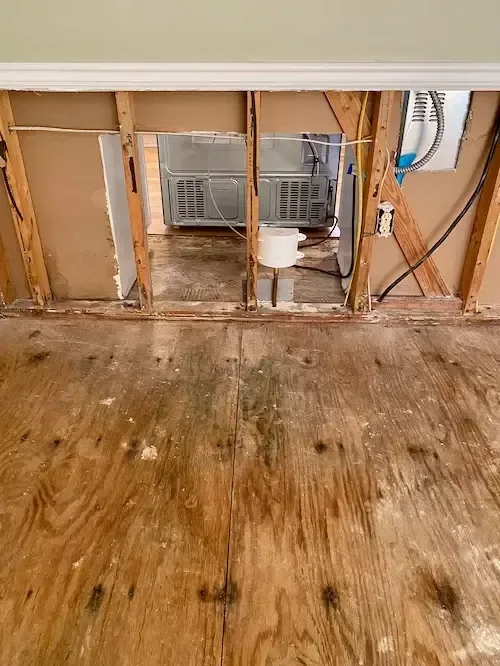
Cabinet interiors and the space beneath trim may need attention when wastewater reached their edges. Opening a component should have a stated purpose, and the crew should document newly exposed contact areas as the work progresses beyond what was visible at the initial room entrance.
Accessible liquid removal may involve water extraction work, but sewage handling also requires contamination control. The owner should receive a clear explanation of which surfaces will be cleaned, which materials will be discarded and which concealed sections still require evaluation.
Keep cleaning decisions ahead of air movement
Ordinary household fans are not a substitute for assessment of a sewage affected space. The crew needs to address contaminated liquid, debris and materials before arranging the drying environment, so equipment does not simply circulate air across surfaces that still need controlled treatment.
Cleaning the retained surfaces requires access to the actual contact area. A floor can appear tidy while residue remains beneath an obstruction, making a cabinet recess or threshold detail important to the work even after the open room has been cleared of visible wastewater.
The progress record should say which retained components have been cleaned and what remains pending. That status helps the owner understand why the room boundary stays in place while additional inspection or removal is arranged, rather than assuming an orderly appearance means the entire process is complete.
- Leave household fans out of the contaminated work area.
- Identify inaccessible surfaces before declaring cleaning complete.
- Keep tools used in the affected room from entering clean storage untreated.
Measure the retained assembly after treatment
The structural drying service follows materials selected to remain after the contamination work. Equipment placement and repeat observations should address those specific components, including floor edges and wall bases that may respond differently from the exposed center of the room.
Access for measurements needs to remain available while drying proceeds. Returning storage boxes or a cabinet panel too early can conceal the very surface that still needs checking, so the owner should know which openings and routes must remain clear until the crew completes its assessment.
A drying note should identify the material measured, the location and the comparison used to evaluate progress. That detail makes the record more useful than a statement that the bathroom feels dry, particularly when the affected water reached beneath a finish that occupants cannot inspect directly.
Explain when the room can return to household use
Returning a room to use involves more than removing equipment. The owner needs the status of source repair, cleaning, material drying and any missing finishes, because an open wall or incomplete fixture connection may still require coordination with the appropriate repair trade.
The final walkthrough should identify the cleaned boundary and any adjoining surface checked during the project. Photographs of the doorway and contents storage area help connect the finished work with the original route used for contaminated materials, making the record easier to understand afterward.
For a Sperry household, a practical handoff names the remaining tasks and the person or trade handling each one. Clear responsibility for reinstallation, finish repairs and belongings treatment supports an orderly return to the room after the cleanup crew has completed its portion of the work.
Questions
Should occupants carry affected items through the living room?
A handling route should be established first. Moving wastewater contacted property through clean occupied space can spread contamination beyond the original room.
Does clearing the drain complete restoration?
The drain repair addresses the source problem. Surfaces and belongings contacted during the backup still require their own cleanup and material assessment.
Why inspect beneath an intact floor covering?
Edges and joints can allow wastewater to reach concealed absorbent layers. The inspection determines whether those layers can remain or need controlled removal.
What should be checked before normal bathroom use returns?
The handoff should address fixture operation, cleaned surfaces, retained material drying and any unfinished openings. Remaining repair work needs a clear plan and suitable access.