Ceiling Leak Water Damage in Mannford
A swollen ceiling can hide water above the room even after dripping slows. Mannford ceiling leak cleanup begins with protection below, then examines the source and the strength of the affected overhead materials.
(888) 619-9509Discuss the damaged ceiling area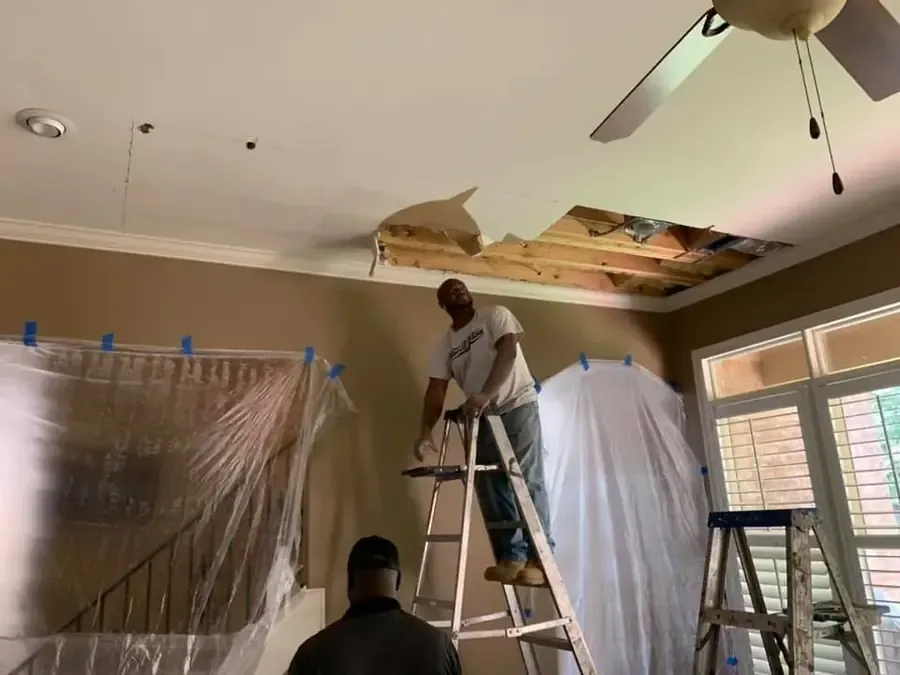
A ceiling bubble changes the priority from appearance to safe access. Water can collect above weakened board while fixtures and belongings remain directly below it. Ceiling leak work in Mannford starts by assessing that overhead condition and restricting the room where necessary, then tracing the water source and the affected layers before any cosmetic repair is planned.
How ceiling leak water damage progresses
Assess conditions below
The room is evaluated for unstable overhead materials, water near electrical components and the access needed to protect occupants and unaffected belongings.
Trace the concealed source
Inspection connects the visible drip with the pipe, fixture or roof problem above it while recording the apparent path across ceiling materials.
Expose affected layers
Controlled access reveals wet board, insulation and framing so removal decisions and retained material drying can address the complete overhead assembly.
Coordinate finishing readiness
Moisture findings and material strength inform the handoff, with remaining ceiling replacement and any damage below the drip clearly identified for repair planning.
First steps for ceiling leak water damage
- 1Clear the overhead hazard zone. Keep occupants away from bulging board and any water around fixtures before considering movement of furniture below the ceiling.
- 2Describe the drip pattern. Note when water appears and whether fixture use or rain changes it, helping focus the investigation above the room.
- 3Avoid cosmetic covering. Leave stains and damaged finishes visible until source correction and the condition of the cavity have been assessed.
- 4Keep the room record. Save photographs of overhead damage and any wet belongings or flooring reached by water falling from the ceiling.
Protect the room before investigating overhead
At a Park View property, furniture beneath a drip may need protection or movement once access is safe. A person should not stand under a bulging ceiling to catch water or push the swollen material upward. Wet board can lose strength, and water around light fixtures adds an electrical concern to the damage assessment.
- Keep people away from sagging board and the space immediately beneath it.
- Describe water near lights or other electrical components before anyone enters.
- Move unaffected belongings only from a dry position outside the unstable area.
- Photograph visible changes without reaching upward or disturbing the ceiling surface.
The source above the room may be a supply pipe, a fixture drain or roof entry. The timing of the drip can help direct investigation: note whether it appears with fixture use or weather. Those observations are useful, but the actual source needs assessment before the ceiling cavity is closed again.
Describe the stain, any sagging and the fixtures near the wet ceiling. A focused assessment can connect the overhead source with room protection and the materials requiring access.
(888) 619-9509Discuss the wet ceiling conditionDetermine how far the overhead moisture traveled
A Rolling Oaks ceiling can have a small stain over a larger wet cavity. Framing and joints can route water away from the original release. Selected access lets the inspection check the backside of board, insulation and connected spaces, rather than assuming the visible ring defines the complete damage boundary.
- Establish a safe work area below the affected ceiling and nearby fixtures.
- Coordinate source investigation before the room receives replacement overhead finishes.
- Open selected damaged sections to inspect retained framing and concealed wet layers.
- Record material conditions as the exposed assembly progresses through drying work.
Opening the ceiling should serve a defined purpose. Damaged board may require removal because it has lost integrity, while another opening may provide access to trapped moisture. The scope should explain these differences so the owner understands why work extends beyond the most visible stain or bubbling paint.
Safe access comes first
The restoration crew checks electrical exposure, overhead stability and the water source before entering the wet area. Occupants keep clear of sagging ceilings and contaminated floors. A qualified professional isolates affected circuits from a dry location. These checks precede extraction because standing water can conceal damage that a surface inspection misses.
Check the surfaces below the original drip
Water that fell from the ceiling can also affect the room beneath it. A Pelican Point property may need inspection of floor coverings, furniture contact points or lower wall edges where the drip collected. Those checks connect overhead repair with the rest of the room instead of leaving a second wet assembly unnoticed.
If a ceiling leak originated from a drain, handling decisions must consider the water's contact history. A clean looking droplet does not determine how affected porous materials should be treated. The source assessment and observed spread together establish the appropriate cleaning and retention decisions for the room.
- Keep ceiling debris separated from clean possessions during controlled removal.
- Ask whether room protection and disposal appear in the proposed estimate.
- Record floor damage discovered beneath furniture after the overhead release stops.
- Confirm which contractor restores the ceiling finish after the cavity is ready.
The closing inspection should account for both moisture and material condition. Retained framing needs suitable drying progress, while weakened board may require replacement regardless of surface dryness. Clear records help explain those separate decisions and give the finishing contractor a useful starting point for reconstruction.
A failed supply connection may also need burst pipe cleanup. When rain is the source, roof leak restoration connects the attic route with the affected room below.
What does ceiling leak water damage cost in Mannford, OK?
Ceiling leak cleanup in Mannford varies with cavity access, unstable materials and spread below the drip. These planning ranges describe interior cleanup scale; the estimate should distinguish source repair from later ceiling finishing.
Small stained section
$700 to $1,400
- Localized damage
- Simple access
- Surface checks
Wet ceiling cavity
$1,400 to $2,600
- Wet layers
- Selective opening
- Framing drying
Broad overhead loss
$2,600 to $4,000
- Unstable board
- Multiple bays
- Room protection
These planning ranges are estimate only. Water category, affected area, material class and the delay before extraction change the scope. The water damage cost calculator explores those variables.
Careful decisions for ceiling leak water damage
Rapid local response
The response team assesses active water, access and source control during 24/7 dispatch. Arrival depends on current conditions and the work required at the property.
IICRC S500 drying standard
The drying technician compares wet assemblies with suitable dry references and adjusts dehumidification to the material load. A dry surface alone does not close the job.
Claim-ready documentation
The mitigation team records initial damage, material decisions, equipment and daily readings. The property owner retains a clearer account of the loss for the insurance review.
Local water experts
The contractor checks the actual building and the reported source before choosing a method. Indoor supply releases, contaminated outside water and backed-up drains require different handling.
Ceiling leak water damage in Mannford
Ceiling assessments extend to KDA and properties along State Highway 51, with safe room access and the overhead source guiding inspection and interior cleanup arrangements.
The same service nearby: ceiling leak water damage in Sand Springs, Oakhurst, Sperry.
Related water damage services in Mannford
Roof Leak Water Damage in Mannford
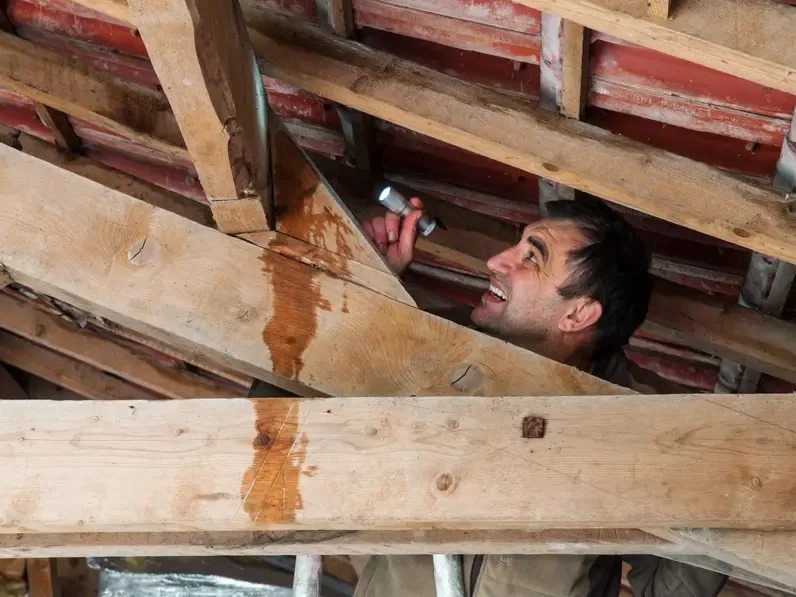
Attic insulation and ceiling layers need inspection after rain enters the roof assembly.
Read about roof leak water damage ›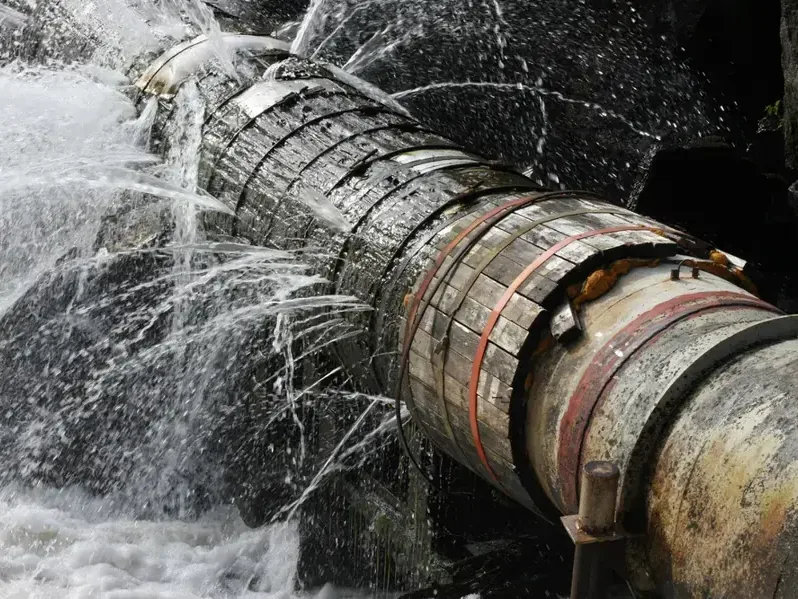
Burst Pipe Water Damage in Mannford
A stopped pipe release still leaves wet cavities that need measured drying and documented access.
Read about burst pipe water damage ›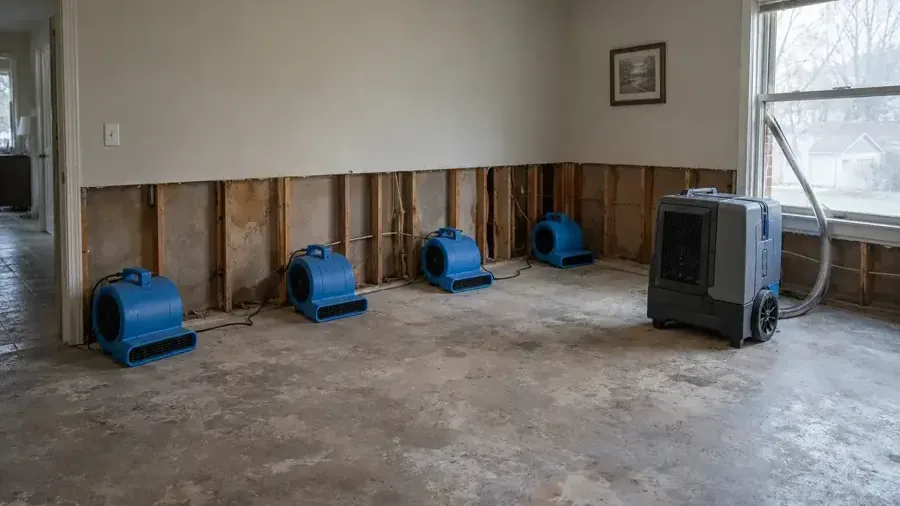
Structural Drying in Mannford
Material readings direct dehumidification until the assembly reaches a defensible drying goal.
Read about structural drying ›Ceiling Leak Water Damage questions in Mannford, OK
Should a bulging ceiling be punctured to drain it?
An owner should keep clear of the swollen area rather than disturb it from below. Wet board may be unstable, and electrical components can be nearby or concealed. Describe the bulge and any dripping so controlled access can be planned with the room hazards and the water source assessed together.
Can the ceiling be damaged even after dripping stops?
Yes. The source may have slowed while water remains in insulation or on the backside of the board. Inspection checks the strength and moisture condition of those overhead materials. The ceiling cavity should receive that assessment before the room is patched or covered with a new painted finish.
Why ask whether an upstairs fixture was being used?
The timing can help direct a source investigation toward a supply connection, drain or fixture assembly. It should be described as an observation, along with changes during rain or periods without fixture use. A qualified assessment then determines the actual source while cleanup records the affected ceiling and room materials.
Will cleanup require moving all room contents?
That depends on the overhead work area, access route and whether belongings were touched by water. Unaffected items may be protected or moved to a dry part of the property. The plan should avoid placing people below unstable material and should document damaged contents before their condition changes during movement.
Why inspect flooring under the ceiling stain?
Water can collect under furniture or soak absorbent flooring after falling from the ceiling. That lower damage may remain after the overhead source is repaired. Inspecting the drip landing area and nearby transitions helps prevent the ceiling repair from becoming the only task while another wet layer remains untreated below it.
Can damaged ceiling board always be dried in place?
Retention depends on its strength, contamination and access to the wet cavity. Some board loses integrity or obstructs inspection of wet insulation and framing. The scope should explain whether removal is required for material condition, drying access or both, instead of deciding solely from the size of the visible stain.
What if the leak came from a drain?
The water source affects cleaning and material handling. Drain water can require different decisions from a fresh supply release, especially where absorbent layers were exposed. Tell the assessor which fixture or drain was involved so the overhead cavity and the room below receive a cleanup plan suited to that contact.
When can the ceiling receive a new finish?
Source correction, suitable drying of retained components and replacement of unsound materials should precede finishing. The handoff should identify the checked cavity and any remaining repairs. This gives the finishing contractor a clearer basis for closing the assembly and helps the owner understand what was addressed above the visible ceiling.
Resolve the cavity before covering the stain
Careful inspection connects overhead safety, source correction and material drying so the ceiling finish follows a clear account of the affected assembly.
(888) 619-9509Plan an overhead damage assessment