Roof Leak Water Damage in Bixby
A ceiling drip may be the last visible part of a longer rainwater path. Interior recovery checks the attic materials and room surfaces reached before the water became noticeable below.
(888) 619-9509Discuss the rainwater path above the room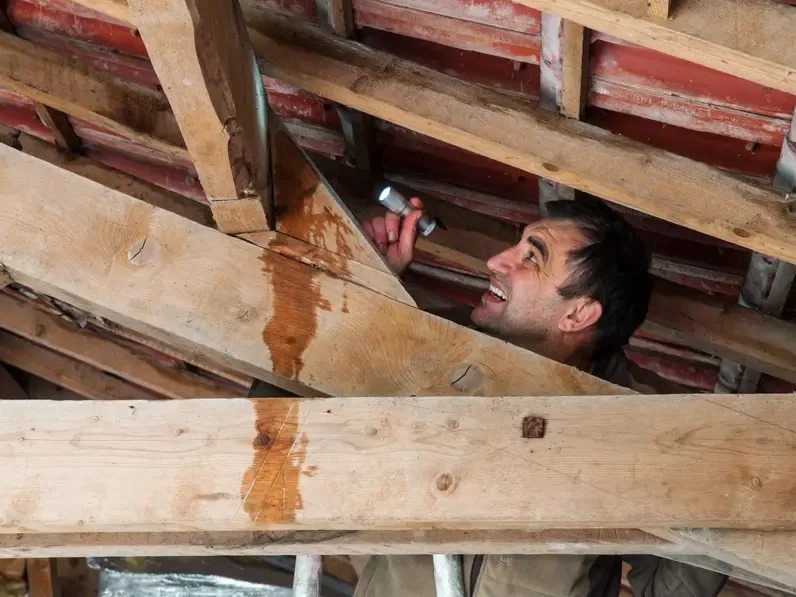
The stain on a ceiling rarely shows the entire rainwater route. Water can follow roof framing before reaching insulation and the finish below, leaving concealed damp areas between the entry and the drip. A roof leak assessment in Bixby connects those points so the interior work addresses the affected assembly instead of stopping at the room's most obvious mark.
How roof leak water damage progresses
Relate the stain to hidden moisture
The assessment examines the room damage and safely accessible attic materials, using the observed water path and roofing findings to define what needs access above the ceiling and around the affected framing.
Open damaged interior layers
Soft ceiling sections and wet insulation are evaluated for removal, with protection for the room below and documentation of exposed conditions.
Dry suitable retained components
Equipment placement accounts for cavity access and material thickness, while readings track the response of the remaining framing and adjacent finishes.
Arrange the interior repair sequence
The handoff identifies source correction, dry material conditions and replacement needs so insulation, ceiling finishes and paint return in an appropriate order.
First steps for roof leak water damage
- 1Avoid the sagging area. Keep occupants clear of soft or bulging ceilings and wet light fittings beneath the suspected roof entry.
- 2Describe the rain connection. Report when dripping appeared, whether it stopped after rain and which ceiling sections changed, without entering an unsafe attic to investigate.
- 3Identify attic access. Tell the assessor where the attic opening is and whether stored belongings or occupied rooms limit access to the wet assembly.
- 4Coordinate the roof work. Retain the roofing trade's findings so interior recovery can account for source correction and any area still exposed to another rain event.
Look above the visible stain
Washington Irving Memorial Park and Arboretum is a local point of interest, and Memorial Road is named in city flood evacuation material. A property's location helps arrange access; the actual attic inspection establishes what the roof leak reached. Occupants should avoid climbing into a wet attic or standing beneath a ceiling that has begun to sag.
- Insulation may retain water against ceiling material after the dripping has stopped.
- Framing can carry moisture away from the opening that admitted the rain.
- Light fittings and other electrical components require appropriate attention when they become wet.
- Stored attic belongings can obstruct inspection and conceal additional damaged surfaces.
A clear account of when the stain changed is useful. The owner can describe whether damage appeared during rainfall, persisted afterward or spread into another room. These observations assist the roof trade and the interior assessment without turning a visible mark into a guess about the exact exterior defect.
A roof stain can hide wet insulation and framing above it. Describe the affected ceiling, attic access and any roofing findings so the interior assessment starts with the full water route.
(888) 619-9509Discuss the wet attic assemblyCoordinate roof correction and interior access
The exterior repair prevents another rain event from wetting the same assembly. Interior cleanup addresses the water already inside. These jobs may progress together, but their boundaries should be clear. Removing a damaged ceiling section can expose wet insulation that needs handling before airflow can reach the retained framing.
- Record the ceiling damage and any safely accessible attic observations.
- Coordinate source correction with the trade responsible for roof work.
- Expose and assess wet insulation, framing and damaged ceiling layers.
- Dry recoverable components before arranging closure and finish restoration.
For a property near Main Street, the initial conversation should identify attic access and rooms beneath the suspected entry. The assessment can then plan a work area that protects occupied space while avoiding unnecessary disturbance to unaffected ceilings. Any opening should have a stated purpose, such as reaching saturated insulation or checking retained wood.
Safe access comes first
The restoration crew checks electrical exposure, overhead stability and the water source before entering the wet area. Occupants keep clear of sagging ceilings and contaminated floors. A qualified professional isolates affected circuits from a dry location. These checks precede extraction because standing water can conceal damage that a surface inspection misses.
Choose repair timing from material conditions
A water stain can remain after a material dries, and a clean-looking area can still hold moisture above the surface. Direct moisture measurements and inspection of the concealed layers determine the repair scope. The technician checks accessible wet layers and records which components can remain. Damaged finishes and insulation selected for replacement should be distinguished from sound framing being dried.
Ceiling leak recovery addresses the overhead room assembly, while structural drying tracks moisture in retained materials. The handoff between those tasks should identify any concealed area still awaiting access, as well as the roof repair status before interior finishes are closed.
- Save roof repair findings alongside interior moisture observations.
- Photograph insulation condition when a damaged ceiling section is opened.
- Identify wet electrical components for the appropriate trade to assess.
- Keep cosmetic painting separate from moisture recovery in the estimate.
The owner should finish with a clear explanation of the rain entry repair, the materials removed and the condition of the assembly left in place. That record supports a sensible sequence for insulation replacement, ceiling closure and painting.
What does roof leak water damage cost in Bixby, OK?
Roof leak water damage costs in Bixby depend on attic access, saturated insulation and the ceiling area involved. These interior recovery ranges need a room assessment, with exterior roof repair listed separately when required.
Small ceiling area
$800 to $1,500
- Focused opening
- Limited insulation
- Surface recovery
Attic and ceiling layers
$1,500 to $3,000
- Layer access
- Framing moisture
- Insulation handling
Several wet bays
$3,000 to $4,500
- Broader exposure
- Connected ceilings
- Expanded drying
These planning ranges are estimate only. Water category, affected area, material class and the delay before extraction change the scope. The water damage cost calculator explores those variables.
Careful decisions for roof leak water damage
Rapid local response
The response team assesses active water, access and source control during 24/7 dispatch. Arrival depends on current conditions and the work required at the property.
IICRC S500 drying standard
The drying technician compares wet assemblies with suitable dry references and adjusts dehumidification to the material load. A dry surface alone does not close the job.
Claim-ready documentation
The mitigation team records initial damage, material decisions, equipment and daily readings. The property owner retains a clearer account of the loss for the insurance review.
Local water experts
The contractor checks the actual building and the reported source before choosing a method. Indoor supply releases, contaminated outside water and backed-up drains require different handling.
Roof leak water damage in Bixby
Roof-related interior damage can be assessed around Village Ten and Brooks Terrace, with attic access, roof repair status and the rooms below the entry discussed during scheduling.
The same service nearby: roof leak water damage in Sand Springs, Oakhurst, Owasso.
Related water damage services in Bixby
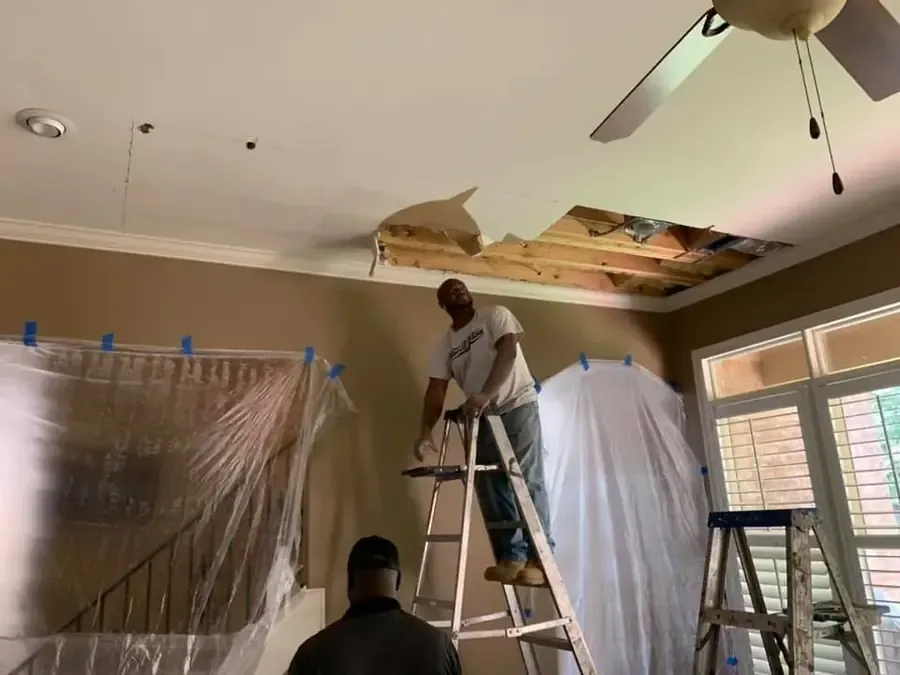
Ceiling Leak Water Damage in Bixby
Overhead water requires safe access to the source before damaged ceiling materials come down.
Read about ceiling leak water damage ›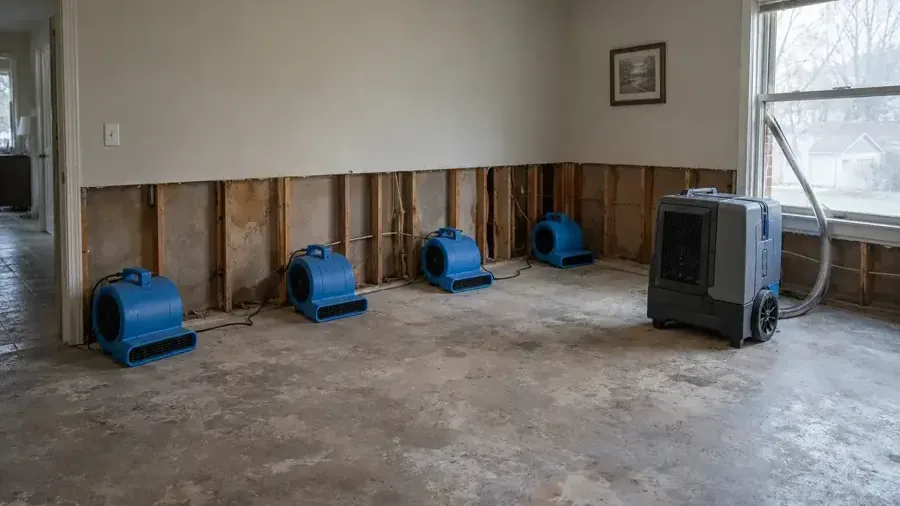
Structural Drying in Bixby
Material readings direct dehumidification until the assembly reaches a defensible drying goal.
Read about structural drying ›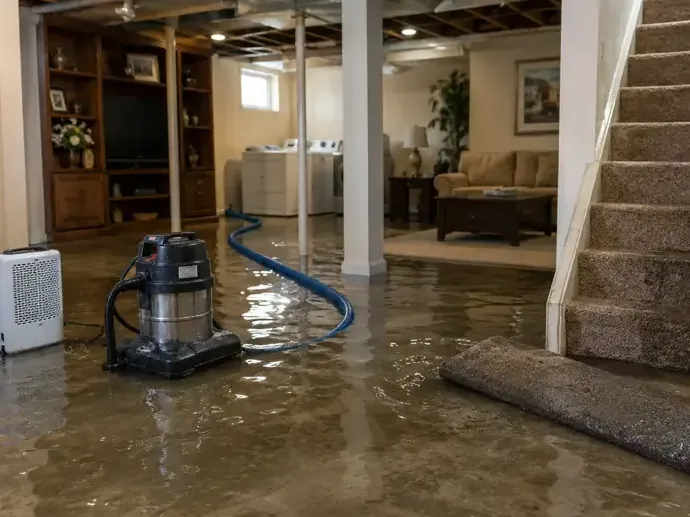
Storm Flood Cleanup in Bixby
Outside water brings sediment and contamination indoors, changing both extraction and material decisions.
Read about storm flood cleanup ›Roof Leak Water Damage questions in Bixby, OK
Does the drip show where the roof opening is?
Rainwater may follow framing or another surface before it drops into the room, so the visible drip and exterior entry can be separated. The roofing investigation locates the defect, while the interior assessment follows affected materials. Both findings help define an accurate recovery scope for the attic and ceiling assembly.
Can the room remain occupied beneath a stained ceiling?
A stain needs assessment, especially if the ceiling is soft, bulging or near wet electrical equipment. Occupants should stay away from visibly unstable areas until their condition is evaluated. The work plan can then identify whether the room needs closure, partial restriction or protection while overhead access and drying take place.
Should wet attic insulation simply be left under a fan?
The insulation type, contamination and condition affect whether it can remain. Saturated material may obstruct airflow or hold water against the ceiling, and damaged insulation may need replacement. The assessment should identify those conditions before equipment is selected, with access arranged safely above or below the affected assembly.
What if the roof has already been repaired?
The interior can still contain moisture in insulation, wood and finishes after the source stops. The owner should provide the repair findings and timing, then arrange assessment of the remaining wet materials. Source correction is an essential step, but it does not replace the checks needed before a ceiling is closed or painted.
Can paint cover the stain once dripping stops?
Painting addresses appearance after the assembly has reached suitable conditions. Hidden insulation and framing may remain wet after dripping stops, and softened ceiling material needs assessment. Moisture checks and required removal should precede cosmetic work, giving the finish trade a sound surface after the source and affected layers have been addressed.
Why would an adjoining ceiling section need checking?
Water can move along framing, insulation or the back of the ceiling finish. The visibly stained patch may show only where it finally emerged. Checking connected sections helps establish the wet boundary and explains whether additional access is needed, rather than assuming every area beyond the mark is unaffected.
Are stored attic items included in the assessment?
Their location and exposure can affect access and the recovery plan. Wet boxes or absorbent belongings may need separate handling, and stored objects can hide damp material underneath. The owner should identify these items before work begins so movement, documentation and any disposal decisions can be coordinated safely with the building assessment.
What should be documented before interior closure?
Useful records identify the roof correction, removed ceiling or insulation, retained material readings and any electrical assessment related to the leak. The repair trade needs to know what remains open and which components require replacement. This gives the owner a coherent handoff from rain entry repair to a restored interior finish.
Prepare the ceiling for a lasting repair
Arrange an assessment of rain-damaged interior materials before new insulation, ceiling board or paint covers the affected space.
(888) 619-9509Request roof leak damage recovery